Bikes for the World

Monday, November 7, 2016

Namibian eBox: Uukumwe

Bicycles for Humanity supported eBox Uukumwe
Now that we've established where the Malagasy eBox model came from we've been taking a closer look at some of those initial entrepreneurial bike shops in Namibia.

The first BEN Namibia eBox started in 2006 and the program has now expanded to include over 30 businesses spread across Namibia. They all began by fixing and selling bikes, but evolved to carry more products and support the community in many diverse ways.

TKMOAMs supports health initiatives and volunteers.  DEEP expanded by adding a computer workshop and Internet Cafe. Today we take a look at Uukumwe Bike Shop in Nkurenkuru, one of the northernmost shops in Namibia supported by BEN Namibia. Uukumwe also started by supporting health care initiatives and today continues to bring positive change to the community by helping to educate local kids.
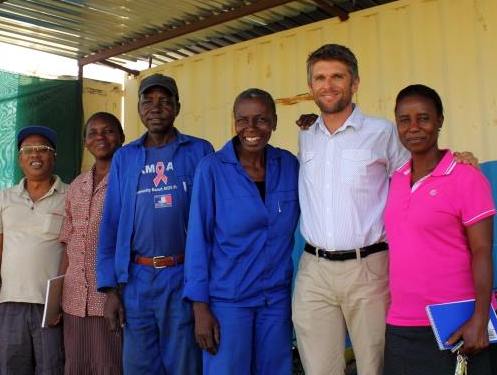
Michael Linke and Markus Kasoma

Markus Kasoma was a home-based care volunteer for HIV-positive people in Nkurenkuru when he got involved with BEN Namibia. He would often travel more than 3 miles to reach patients. In a town with no public transportation and poor roads if any, villagers walked everywhere.

Laina is HIV-positive and a patient of Markus's. Markus would visit Laina once or twice a week to provide counseling, check in on her treatment, and to deliver more pills when needed.

Laina lived in extreme poverty with five other women and lots of children. "Many of them eat only once a day," reported Markus. Hunger is something he saw a lot during home visits. It was not unusual to find patients who had stopped taking their medications after fighting nausea from taking the pills on an empty stomach.

When BEN Namibia came to town in 2008 to help establish Uukumwe Bike Shop, Markus immediately signed up for training. He quickly learned the ins and outs of bike mechanics and became the shop manager. He split his time between Uukumwe and volunteering with the Red Cross.

Nkurenkuru Kindergarten
Now there are bikes everywhere in Nkurenkuru. And Uukumwe is extending a helping hand by using profits from the shop to make a difference in the community.

Many of the local eBoxes use proceeds from bike sales and repairs to help feed orphanages and affect the lives of children.

This kindergarten class receives support through Uukumwe. In fact, with the help of Bicycles for Humanity Colorado, a second container arrived that became a classroom for these students.
Gothard, Uukumwe Manager

Today Uukumwe is going strong. Gothard has taken over as the shop manager and continues the success built by Markus. Gothard was trained as a mechanic and assumed the new position when Markus moved on in 2012.

Markus followed his dream of joining the Namibian Police Force and is now a constable at the Nkurenkuru police station.

Many shop managers move on to accept bigger and better positions and Director of BEN Namibia, Michael Linke sees that as a positive thing. "With massive unemployment (27%) if you can run a bike shop well, you stand out to other potential employers, and the security of a government job or a well paid job in tourism is very appealing."

Passing the wrench on to the next mechanic is building a stronger Namibia. BEN trained mechanics go on to become maintenance workers, welders, and many other skilled laborers. The eBoxes continue to grow and expand, introducing new skills to new workers... and the cycle continues...


Friday, November 4, 2016

Namibian eBox: DEEP

Lavinia (DEEP) and Helalia (TKMOAMS)
DEEP (Disability Economic Empowerment Project) is an eBox situated in northern Namibia not far from the TKMOAMS eBox. And like TKMOAMS, DEEP was established nearly a decade ago and reaches far beyond bicycle mobility.

Lavinia Friedrich, finance manager at DEEP, and Helalia Shipinge, TKMOAMS manager, are seen here with solar powered lights for sale in their eBoxes. These micro-business bike shops, originally established to bring affordable transportation to rural Namibia, have flourished and evolved. Many eBoxes now offer a variety of products to ease rural living, many cycling related, but not all.

It is the success of these small businesses, capital raised and reinvested, and the skill set provided and honed under the eye of BEN Namibia, that have given these communities hope and purpose. Many eBox businesses reinvest not only in their shops, but also in their community, in their people.

DEEP mission: Changing attitudes and creating positive role models
DEEP, as the name implies, actually began with hope and purpose. The original idea was to develop a project for people with disabilities. To help bring rehabilitation and home care through bicycles. Before the project even saw its first bike, however, DEEP evolved into much more. Those individuals with disabilities were called on to run the business. They were trained to be mechanics, salespeople, financial officers.

Moses Tolata helped establish DEEP through BEN Namibia who helped open the shop in 2007. BEN Namibia provided training to mechanics, including Moses.

"This is the first time in my life that I have a permanent job. People think a disabled person can't do anything. You can have the same or even better skills as others, but people won't give the job to you," remembers Moses. But not since DEEP.

Lavinia Friedrich came on board with DEEP as the finance manager. When Lavinia was 14 she was carrying water in a container on her head. As she was returning to her village the container fell and struck her hip. When she went to the hospital for the pain she learned she had dislocated her hip and needed surgery. Four months later she was released from the hospital but walked with a limp.

Because of the discrimination against people with disabilities Lavinia struggled to find work before she found DEEP. She excelled in her position which propelled DEEP forward. Lavinia helped build DEEP from a busy bicycle shop into a thriving, diverse business. In recent years, through grant support, they were even able to add a computer training center and Internet cafe.

David, Moses, and Lavinia
David Ingo lost his leg when he was six years old. When he fell playing soccer he was injured when another boy stepped on his leg. At the hospital the doctors found a bruise on his shin that they believed could have been cancer. His family decided to amputate the leg to save David.

David was trained as a mechanic at DEEP where he worked when he wasn't studying computers. "I would like to study electrical engineering, and I'm saving money and studying at home to go to college," reported David back in 2009.

Last year we checked back in with DEEP. Moses was still there leading the team at the eBox and Lavinia was still in charge of finances. David followed his dream of continuing his education. He was taking classes to learn welding at a vocational school in hopes of returning to build bicycle racks at DEEP.

Unexpectedly last fall, we received word that Lavinia had passed away. From BEN Namibia:  "Lavinia was with the project from the beginning in 2007. Lavinia was a vibrant and dynamic person and showed her community that living with a disability is no barrier to achieving your dreams. Lavinia will be deeply missed by all of us at BEN Namibia. Our condolences to her family and colleagues at DEEP."

You can find DEEPs history along with many other stories in Namibia on Two Wheels by Gisele Netto and Michael Linke. Available now on Amazon.


Thursday, November 3, 2016

Featured Volunteer: Richard Lieberman

It's been a hotly contested fight. Surely there were some insults and promises. It was dragged out and indeed ended with some mud 'slinging' (after a rain delay), but it's finally over. We have a decided winner. America, the Cubbies are great again!

We don't know if Richard Lieberman was rooting for Cleveland or Chicago, or anyone at all, but when naming this month's Featured Volunteer we couldn't help but throw in a little baseball after last night's epic series finale.

And we found this baseball quote to be apropos for the occasion, "My responsibility is getting all my players playing for the name on the front of the jersey, not the one on the back," anonymous.

Meet the Congregation Beth El Bikes for the World crew. And the fearless and dedicated leader, Richard Lieberman. After more than a decade of collecting bikes for BfW Richard's red shirt appears to free and clear of bike grease.

Either he has effectively recruited an amazing team of wrenching volunteers or he regularly washes with Dawn dish detergent, which truly does power through grease! As does his hard working team (seen here in smartly chosen black shirts).

This year they had a beautiful, warm fall day and the turn out was great. In fact Congregation Beth El saw their best year yet collecting 75 bikes.

Director Keith Oberg cited the dedication of Richard Lieberman and especially the amazing team he has put together year after year. Twelve to be exact!

Keith also pointed out the increase in bikes over the last few years which correlates to the publicity efforts of team member Linda Kolko (seen here in blue). Without taking sides, we'll just mention she's been preoccupied with another hotly contested race recently...but didn't let a little election get in the way of supporting one of her favorite causes!

Overall, Keith said it was a great day with a great group. He enjoyed working with the younger members of the crew who asked really good questions and were quick learners.


Wednesday, October 26, 2016

Namibian eBox: A Closer Look, TKMOAMS

TKMOAMS bike ambulance training
Now that we've introduced you to the eBox concept and showed you the connection between two of BfW's partners, from one of the oldest (BEN Namibia) to one of the newest (Transaid's MAHEFA project in Madagascar) let's take a closer look at what makes an eBox unique.

The foundation or model remains unchanged from Namibia to Kenya to Madagascar. Founder Michael Linke developed and implemented this entrepreneurial 'bike shop in box' that has been creating jobs, income, and opportunities in communities all over Africa, specifically with BENN in Namibia.

There are now 33 established eBox businesses operating in many corners of Namibia. They sell bikes. They provide meals for orphans. They fund health care initiatives. They introduce new ideas like solar power. They create jobs. They offer HOPE. 

This is Helalia Shipinge. She is involved in a non profit known as TKMOAMS which was formed two decades ago to help people cope with living with AIDS/HIV. Ten years later the bike shop component, also known as TKMOAMS was added. This was to provide incentive to volunteers, jobs to the community, and of course bikes.

Helalia started volunteering with TKMOAMS when it started in 1996. Back then no one was even talking about AIDS. Helalia can remember people hiding sick family members out of shame. "People need information about AIDS and to be taken care of," Helalia said back then, and still believes today.

She remembers when she and the other volunteers received donated bikes through BENN. She used the bike to visit patients greater and greater distances. "Before (the bike) we just couldn't go, or have to save money to pay a transport or walk for hours. It's amazing how fast you can go on a bicycle and how far you can go on it," she beams.

In 2006, Helelia recalls a local bike race she entered. She wanted to see how far she could go and she won the race! She was instantly hooked.

When she heard about the bicycle mechanics training being offered by BENN at the time, she jumped at the chance. She saw how bikes were helping fellow volunteers at TKMOAMS. She knew bikes were helping to save lives. "I don't know, suddenly I was surrounded by bicycles," she recalled.

Helalia, seen here with Michael Linke, is now the manager of the TKMOAMS eBox. This team met with our partner in Madagascar to help orient them while creating the MAHEFA eBox system to support health care initiatives in Madagascar.

You can find Helalia's story along with many others in Namibia on Two Wheels by Gisele Netto and Michael Linke. Available now on Amazon.

Tuesday, October 25, 2016

The eBox Beginning: From Namibia to Madagascar

Michael Linke (back) with the crew at Walvis Bay
So where did this Malagasy idea of an 'eBox' come from? None other than BfW partner BEN Namibia (BENN) and founder Michael Linke. In fact it's BENN's model and training that made the bike enterprise 'box' come to life in Madagascar through overseeing partner Transaid.

After Transaid identified the need for a motivating, sustainable project to compliment the health initiatives in Menabe, the idea of bikes and repair was a natural fit. And they looked to BENN, who has been running successful bike co-op shops for nearly a decade, for guidance.

TKMOAMS eBox crew with Michael Linke and Madagascar visitors
Two years ago these minds got together and laid out a plan to bring the eBox idea to Madagascar. Michael visited Madagascar and key players from the MAHEFA program in Madagascar paid BENN a visit to see the eBox in action.

Together, these two groups created the Malagasy eBox system, which looked a whole lot like BENN's eBox genius. BfW was quick to jump on board to help support the effort in Madagascar knowing first hand the success in Namibia.

BENN established their first official eBox (known then as a BEC, Bicycle Empowerment Centre) in December of 2006.  This is also the first year BfW and BENN joined forces. Since then, BfW has donated nearly 2,000 bikes to Namibia in support of this program.

Gloria rides by local eBox
An eBox is a shipping container filled with about 350 bikes, spare parts, and tools which BENN delivers and positions in rural communities around Namibia. They are run as small businesses that often times become the hub of the community.

In addition to the tangible components of a bike shop, BENN also provides training to new mechanics and business skills essential to running a successful business.

What began as solely a 'bike business' has grown into much more over the last decade. Many of the established eBoxes provide funding to other organizations and community run efforts through income from bike sales. The eBoxes are supporting health care workers, feeding children, and providing jobs and transportation in areas where cars are scarce.

Solar power station. Photo: Elephant Energy
And it's no longer just about the bike. Elephant Energy introduced the idea of the powerful FREE solar service to communities around Namibia. EBoxes now also sell solar powered devices and travel around promoting the idea of using the sun to power items like lights and even cell phones.

Through other partnerships, like Elephant Energy, eBoxes now supply a range of goods and services to the community, outside of 'just bikes'. This prompted BENN to change the name of these entrepreneurial shops from BECs, less emphasis on just BICYCLES, to eBoxes, more emphasis on ENTERPRISE and growth.

Miandrivazo container shipped thru BfW
Back to Madagascar. In 2015, BfW sent the shipping container seen in this photo (left) to the co-op eBox known as Miandrivazo. The container was packed with bikes, tools, and spare parts to help get this co-op off the ground and rolling. Just this month a second container arrived in Madagascar from BfW.

And, as in Namibia, this newly formed bike business is already doing more than just selling bikes. It's creating jobs, incentives for health workers, and even planting the seed (pun intended) for new business ideas. Plans are already in the works for this community to start diversified businesses ranging from selling rice, fish, and vegetables.

Wednesday, October 5, 2016

Miandrivazo eBox: Making Our Bikes Work

To us, this looks like the inside of an average shipping container. Bikes for the World loads and ships about 30 of these a year. They are packed with about 500 donated bicycles, each one of those affecting and changing up to four lives each.

But this particular container is different. This container was loaded in the spring of 2015 and arrived in Madagascar several months later. It contained over 500 bikes and tons of spare parts. But that's not all, the container itself would remain behind and become a workable, viable bike shop!

Jump over to Madagascar, and here's what that 'idea' would look like. This shipping container arrived packed with bikes which became the 'stock' for this newly formed micro-business.

The container is placed in a rural location to better serve new bike owners who may need parts or service in the future. Rather than traveling many miles to a city, where such services are available, this community run shop will help keep these donated bikes rolling while also creating local jobs in town.

The container is modified to better function as a bike shop. Maybe they add windows and doors. Another roof to help block the heat of the sun. It really becomes the bones of the business. And the heart of the community.

This concept is known locally in Madagascar as an eBox. It was more than 'borrowed' from BfW's Namibian partner Bicycle Empowerment Network (BENN); BENN helped establish and train participants in this pilot effort. Trainees learned about bike sales, repairs, and how to effectively run a business. Maintaining this project as a sustainable business is a top priority.

Ultimately, four cooperative bike shops were established in Madagascar through this recent effort. The container above, which shipped from Arlington VA, is currently being remodeled to become a lasting part of the shop, seen here, in Miandrivazo.

Our second container of donated bikes, which shipped in August, is set to arrive in Miandrivazo later this month. The success of the project relies on the new skills brought into the co-op and the arrival of a second shipment is testament that it is working.

Earlier in our blog we explained the importance of the eBox and how revenue generated through bike sales is helping not only the community but also the entire health care initiative established through Transaid.

Mr. Joceyln is a peer educator and now bike mechanic. Mr. Joceyln is a volunteer who travels around spreading valuable healthcare information to people in his village. This important knowledge is helping save lives and keeping people safe.

To help Mr.. Joceyln travel long distances to reach more people, he received this brand new Spida bike through the MAHEFA project.  Mr. Joceyln was chosen to receive training as a bike mechanic as a means to offer an incentive for being a volunteer. He now also works as a mechanic and receives a small salary which helps support his family.

Mr. Joceyln will be on hand when our bikes arrive in Miandrivazo, and he will ensure that those bikes are in good working order before they are distributed throughout the region. 


Saturday, October 1, 2016

Featured Volunteer: Jeff Davis

This guy knows bikes. And he's no stranger to teaching kids either. So mentoring volunteers at King Farm during our Rockville Youth Bike Project days was a perfect fit for this month's Featured Volunteer Jeff Davis.

Jeff has been involved with Bikes for the World since we popped up in the Rockville landscape, first at King Farm and also over at the Twinbrook warehouse location. He used to help Mike (blast from the past) working with the kids at King Farm who were there earning SSL (student service learning) hours necessary for graduation.

Jeff's past as a bike mechanic coupled with his experience with kids as a teacher in the Montgomery County school system were great assets to Mike, who regularly had his hands full out at King Farm.

But the help didn't end there. Neither sleet, nor rain, nor snow stopped Jeff when it came to BfW. During one snowy MLK Jr. Day, Jeff helped collect bikes during a service project at our Twinbrook location. He was a huge help working with kids there to earn SSL hours.

Jeff retired from teaching in the schools, but kept that skill going while volunteering with Bikes for the World. And he kept his mechanic skills honed by working in the bike shop at REI.

"One of the best parts of mentoring other volunteers was helping them learn how a bicycle worked. Taking parts off or moving them around let the 'newbies' get their hands on the parts and see how they worked," said Jeff.

This is a sentiment shared by all of us at BfW. Teaching kids AND adults how to do simple maintenance items on a bike could keep them safe on the road. Explaining how to use basic tools during our prep sessions is a good introduction to getting your hands dirty on a bike.

Jeff is constantly tinkering on old bikes and building up frames from parts he collects in his travels. We aren't sure how many bikes he actually owns, but he regularly collects bikes at work at REI for BfW and drops them by from time to time.

For some of our old vintage bikes (think Schwinn Stingray) he takes those, gives them a tune up, and helps us sells them to owners here who may be drawn to them out of nostalgia. Jeff also knows and swears by the older frames and technology that have held up over the decades. Some of those old Schwinn kids bikes are a much higher quality than what you find today. And if you see one driving around on a bike rack in Montgomery County, that could be Jeff. He's sold a few bikes by just driving around with a For Sale sign on them.

"I do here what bike mechanics do in foreign countries when they receive donated bikes. I take the hopeless and make them usable and desirable. I firmly believe in repair rather than replace. I repaired a cracked aluminum frame with corrugated cardboard, carbon fiber strands and epoxy," said Jeff. See, we weren't joking, this guy knows his stuff!