Bikes for the World

Showing posts with label Costa Rica. Show all posts

Tuesday, August 8, 2017

Johan: Costa Rican Farmer

Continuing our series, One Bike, Two Wheels, Four Revolutions we take a look at how one bicycle often affects up to four lives (or more!). Here we introduce a new bike owner who received a bike from our last container shipped from our Charleston location. 

But we also bring you the story of one beneficiary who benefited from the bike project, without even receiving a bicycle. Through our local partner FINCA Costa Rica we are improving the lives of small business owners and in turn entire communities. This micro-finance project works with communities to establish Community Credit Enterprises (ECC) that offer small business loans to its members. Those loans help develop local business such as cattle farming, agriculture, commerce, or services.
Jakob and Johan

Johan Leandro has spent most of his life farming the lands in his hometown of San Cristobal Norte Desamparados, San Jose Costa Rica. He provides for his family by harvesting vegetables and selling them to local vendors in the town market.

Johan asked for a $1,800 loan to increase his crop production. He will use the money to buy more seeds focusing on a better quality seed. He hopes to double or triple his yield of tomatoes, green beans, and sweet peppers.

This increase in his crops will allow him to sell more produce to vendors, bring home more money for his family, and improve their quality of life.

The loans through the ECC are made possible because of bike sales by the co-op. The bikes are received through shipments from Bikes for the World and placed by FINCA Costa Rica based on need and type of bike. The members of the receiving co-op prepare the bikes for sale and the proceeds fund the community business loans.

Jakob picked out his bike from our container donated this summer through Bikes for the World Charleston. Bikes were collected through a statewide effort among United Methodist churches in South Carolina.

In our One Bike, Two Wheels series we look at how Celia benefited from our bike donations by expanding her motorcycle repair shop. Read more here...


Monday, August 7, 2017

Celia: Motorcycle Repair Shop

Continuing our series, One Bike, Two Wheels, Four Revolutions we take a look at how one bicycle often affects up to four lives (or more!). Here we introduce a new bike owner who received a bike from our last container shipped from our Charleston location.

But we also bring you the story of one beneficiary who benefited from the bike project, without even receiving a bicycle. Through our local partner FINCA Costa Rica we are improving the lives of small business owners and in turn entire communities. This micro-finance project works with communities to establish Community Credit Enterprises (ECC) that offer small business loans to its members. Those loans help develop local business such as cattle farming, agriculture, commerce, or services.

Diana and Celia

Celia Reyes is a single mother of two. The family lives in Upala where Celia has owned and operated a motorcycle repair shop for the last four years. Celia turned to her local ECC recently for a loan to grow her repair business.

Her loan of $1,800 will help her offer a wider range of services within the shop. She can now buy more spare parts for repairs as well as to sell to customers doing their own repairs. The increase in business could lead to hiring more mechanics improving their lives as well as her own.


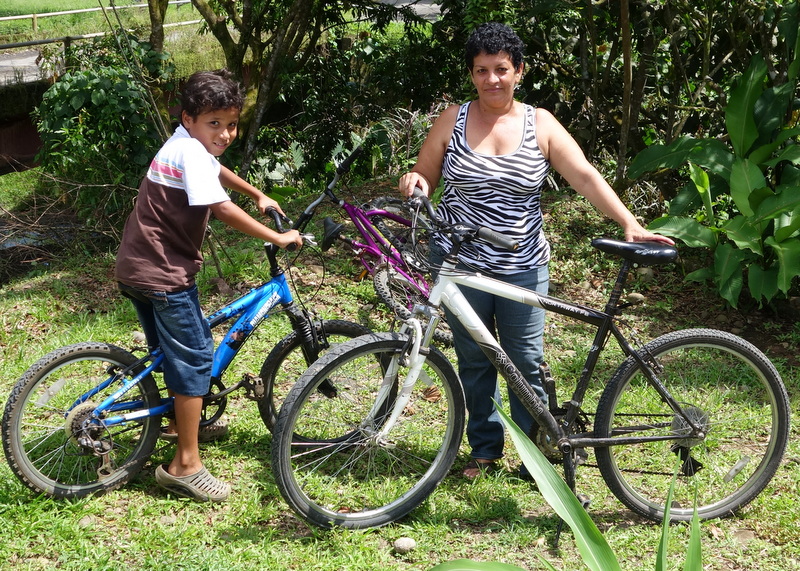
Little Diana is very excited about her new baby blue Schwinn her family purchased from our last container that arrived this summer via Bikes for the World Charleston. She likes all the pink accents, especially the basket and streamers. She will now be able to ride with some of the other kids in her community who also just received or already had bikes.


Through our donated bikes, rural ECCs are able to raise funds for a general pot of money that can be used by members to augment or improve their businesses that serve the communities where they live. Members who purchase the refurbish bikes are also able to improve their own lives with more affordable, reliable transportation for school, work, or errands.

Find out how Maria used her loan to improve the lives of her sheep in our One Bike, Two Wheels series...

Saturday, August 5, 2017

Plutarco: Costa Rican Pulperia

Continuing our series, One Bike, Two Wheels, Four Revolutions we take a look at how one bicycle often affects up to four lives (or more!). Here we introduce a new bike owner who received a bike from our last container shipped from our Charleston location.

But we also bring you the story of one beneficiary who benefited from the bike project, without even receiving a bicycle. Through our local partner FINCA Costa Rica we are improving the lives of small business owners and in turn entire communities. This micro-finance project works with communities to establish Community Credit Enterprises (ECC) that offer small business loans to its members. Those loans help develop local business such as cattle farming, agriculture, commerce, or services.
Emmanuel and Plutarco


Plutarco Sequeira
is also from Canalete, where Maria, Tonito, and Eduviges live. Plutarco and his wife own a small convenience store known as a pulperia. For four years they have been supplying the community with items such as food and cleaning supplies. Given the remoteness of Canalete, Plutarco's store is quite popular among his neighbors. They are able to dash in and pick up items without spending a lot of time walking all the way into town.

Plutarco asked his local ECC for a $1,000 loan so that he could increase his stock with a wider variety of items. The loan allowed Plutarco to purchase more merchandise for his customers. They can now buy most of their needs right there in Canalete rather than spending time and energy walking to the next bigger town where more goods and services are sold.

Plutarco and his wife now bring in more income to support their family's needs. They also provide a valuable service to the community which helps improve their lives as well.

It's through our bike donations that these ECCs raise capital for the community loans. Little Emmanuel received this bike from our last container when his family purchased it at the community warehouse. He will soon learn to ride to ride on two wheels just like the previous owner of this bike.

Friday, August 4, 2017

One Bike, Two Wheels, Four Revolutions

This story of change begins with the bike, but it doesn't end there. Our donated bikes are helping to improve lives in so many ways in Costa Rica it's hard to keep track of them all. 

For you, that bike you donated may represent memories of fun times on the trail, easy commutes to work, or a milestone in your child's life when she took her first solo ride toward independence.

In Costa Rica that one bike might represent a ticket to improved education for a student, a job for a local mechanic, a tool for a struggling family, and a financial loan to improve a small business. 

FINCA Costa Rica has been working with Bikes for the World since 2005 to bring bicycles into small rural villages to improve transportation needs. But that wasn't the final goal of bringing bikes to these communities. Find out how your donated bikes are changing lives on two wheels and off in this short series highlighting the stories of five local entrepreneurs.

Maria Ignacia lives in a community known as Canalete in Upala, Costa Rica. She is part of the Community Credit Enterprise (ECC) that our partner FINCA Costa Rica helped establish. The ECC has over 100 members and each member has the ability to apply for a small business loan to help improve their productivity. 

Our bikes serve as the capital needed to grant these loans to members of the co-op. If an ECC requests a container or partial shipment of bicycles they prep our donated bikes for use and sell them among the community or to their neighbors. Each bike is sold for between $10-100 depending on the quality of the bike. The proceeds then get folded into this general fund for use among the community to improve their businesses, or sometimes to get a new one started.

Maria applied for a loan to help build a chicken coop to protect her main source of income for her family...egg production. She has been raising chickens and collecting eggs for the past year. She collects the eggs and sells them throughout the community to help provide for her and her family. 

FINCA helped facilitate the $1,800 loan she needed to build a small chicken coop. Her chickens are now better protected from the elements and their productivity is much improved. Maria now has more money for her family even while she works to pay back the loan to the ECC.

Tonito and Eduviges

Tonito and Eduviges are not related but both live in the same community as Maria, Canalete. Both received bikes from our shipment to this community in 2014. We had a chance to meet them when we visited the community that fall and even rode with Tonito through the community. 

Eduviges bought her bicycle through the co-op and she uses it to commute to work. Eduviges works on a lychee farm and used to get up at 5am to walk the two hours to the lychee field. She can now cover the same ground in less than half the time, saving time and energy.

Tonito is from a very poor family that lives in Nicaragua. They sent Tonito to Canalete to live with his grandfather in hopes of giving him a better life. The co-op members decided to give Tonito a bicycle and helmet to reward him for getting such good grades in school. 

Tonito was also on hand to help unload the bikes that were donated to the community and helped organize and prep them for sale. The sale of those bikes, including Eduviges's, may have helped provide the loan to Maria for her business.


Wednesday, July 26, 2017

We've Been Invaded By Canada....Again

DC Serve Canadian/Michigan based crew
Joining forces with volunteers from around the globe, Bikes for the World kicked off July by desperately trying to empty out the warehouse to make a little room to move around. We failed, by the way. Still stacked to the rafters with bikes, which is not a bad problem to have because it means more bikes to donate!

BfW, keeping with our annual tradition, welcomed two crews from DC Serve to help load the first container of bikes heading to Costa Rica. The crews, largely from Canada, worked through one of the hottest weeks of the year to start and finish a container on back to back days.

Cypriots welcoming the Birzers from the Carroll Creek Rotary
Then, just when we thought it couldn't get any hotter, it did. The following week we brought in another container and welcomed back the Cyprus Friendship crew, who hasn't visited us since we left King Farm. Now that we are back in Montgomery County we were thrilled to have a group of six girls back with us again from this amazing program.

Cyprus is located in the Eastern Mediterranean  with Turkey to the north and Greece to the west. Cyprus is divided in two with Turkish-speaking Muslims on the north and Greek-speaking Christians on the south. This deeply divided nation has been at odds for generations and Cyprus Friendship Program is one way they are trying to change attitudes and bring a more peaceful future to its people.

The program pairs two girls (or boys), one from the north and one from the south, and challenges them to work together, live together, laugh together: ultimately creating a bond they will hopefully keep upon their return home and serve as an example to their families and friends. A catalyst to change. They spend one month here in the US with host families and participate in numerous peace focused workshops.

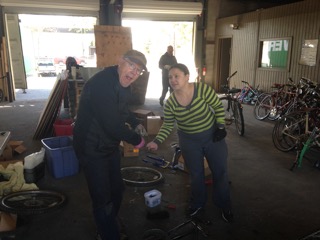
When they visited us, we put wrenches in their hands and put them right to work. At the beginning of our day we asked if they had ever worked on a bicycle before and they collectively said no. By the end they were tearing through our bikes like seasoned bike mechanics. We apologized for the sweltering, muggy DC heat wave that plagued their visit and they said, no worries, it's just like home!

Not to create any rivalries here in our  bipartisan warehouse, but it was no contest between the Cypriot youth when asked which is better, Baltimore or DC. On the topic of healthcare, the Canadians said, good luck with that, we're good. It's a small, small world here in our warehouse.

Bikes for the World has nearly 1,000 bikes now on the way to Costa Rica to share among about half a dozen urban and rural communities. These bikes will provide much needed affordable transportation for work and school, but they will also be part of a bigger economic impact we will tell you about in upcoming posts. Check back soon...

Sunday, February 26, 2017

The Fabric of a Community

Dona Adela Bastos (seen right) lives in Upala Costa Rica. She owns her own business making and selling items she creates with her sewing machine. She is able to support her family through the sale of pillows, curtains, and intimate apparel.

Life in rural Costa Rica is idyllic. Towns are located off the main routes often accessed by small gravel paths. They are nestled beyond the pineapple fields and at the foot of coffee crops that loom on steep hills overhead. This peaceful seclusion, however, often cuts families off from the main artery of the country. This affects their access to jobs and income. It also impacts their ability to run basic errands for their families which become costly and time consuming.

While families have spectacular views of mountains and impressive volcanoes that make up much of inland Costa Rica, they are far away from the beautiful beaches that tourists come to see and where many of the tourism dollars land. Community members have serene lives but they are sometimes a mile or more away from the small businesses that even serve their communities.

Financially, these families struggle. Employment opportunities are sparse. Construction is a lucrative career, but traveling to distant job sites becomes a hardship for laborers. Likewise, many business opportunities lie on the outskirts of their communities or even further away. Without reliable personal transportation, some opportunities lie just out of reach for many people. Others spend a big percentage of their salaries on bus fare for lengthy commutes that often don't stick to published schedules.

FINCA Costa Rica, BfW's longest international partner,  works to improve the socioeconomic conditions and quality of life for the poorest families in Costa Rica, especially those living in rural areas. Their primary model to achieve this goal is through the establishment of community-run micro-credit groups- Community Credit Associations (Empresas de Credito Comunal, or ECCs). The ECCs are owned by local residents and provide financial services to their members that help them develop productive home-based businesses, such as carpentry, sewing, baking, petty commerce, and reinvest in their communities.

In this way ECCs are able to create their own small businesses in their own communities, many of them working right out of their own homes. Dona Adela, above, is a member of the ECC known as Canalete. This is the same community Bikes for the World visited in 2014. It is also the same area that was severely affected by Hurricane Otto last fall.

Bikes for the World donates containers of bikes to FINCA Costa Rica who helps distribute them among these ECCs scattered all over Costa Rica. The bike project, known as MiBici, helps create capital to support this micro-credit project and ultimately to help establish these small businesses that are the fabric of the community.

Additionally, BfW has donated over 300 sewing machines to this project since 2005. Some ECCs offer sewing workshops like this one in Pital El Encanto in San Carlos. A teacher is hired in the community to run the workshop and participants pay a fee to attend. Part of this entrance fee is reinvested in the ECC which helps provide those micro-loans to community entrepreneurs.

In this particular class there are 13 students, ten of them have little to no previous experience as seamstresses. The three who currently work as seamstresses will improve their skills to produce more intricate stitches and complex creations. The other ten are considering adopting this as a career to help support their families.

Luz Marina Morales Mora lives in San Francisco de La Palmera, also in San Carlos. We met Luz Marina during our visit in 2014. She sews for her family and neighbors, creating pillows, dresses, and other various linen items for personal wear and household use. She also makes and sells toy stick horses for children.

Our container that arrived last fall in the middle of the hurricane was redirected when its destined community of Upala was damaged by floods and mud from the storm. While the community no longer had the warehouse available to accept the 500 bikes in the container, they were able to receive the 26 sewing machines included in that container.

Mrs. Mirna Ordonez received one of those sewing machines to improve her business that was set up through her ECCs micro-credit program. Dona Mirna makes tents and mosquito nets and sells them to neighbors.

A replacement container of bikes was shipped from our South Carolina location earlier this month and is scheduled to arrive any day. These bikes will be distributed in communities within Upala.


Friday, February 10, 2017

From Carolina to Costa Rica, With Love

Ralph and Kitty Echenique
While Bikes for the World folks up north trained an eye on a groundhog hole waiting to hear if spring was near or far, our South Carolina crew was busy as a beaver preparing for their first ever container loading.

February 3 & 4 our newest BfW chapter saw their hard work pay off. After more than a year of collecting bikes, this motley crew set out to move 500 or so bikes from a roomy warehouse to a cramped shipping container. And just in time, as they were asked to vacate that warehouse this month.

Cape Fear Academy crew led by Becky Copenhaver
This effort really started back in the fall of 2015 with BfW partner Cape Fear Academy. This school effort brought 133 bikes from North Carolina to South Carolina to jump start the Carolina chapter of BfW.

To be honest, the 'effort' really started with Navy retiree Paul Keefer, who we honored last month. Paul is the area coordinator who secured free warehouse space and coordinated pick ups of loads of bikes from two to two hundred. He has also worked tirelessly to bring the BfW name and mission to hundreds of Carolinians who had only wondered before, "what can I do with this old bike?"

Paige and Jaime Stacy
With the help of Bikes for the World, the answer became simple...DONATE IT! But Paul quickly found getting the word out is practically a full time job. Thankfully he found Jaime Stacy who has been leading much of the communication outreach effort down there (not to mention providing some of the muscle too).

Paul also spent most of last year reaching out to clubs and groups introducing our idea of collecting bikes as a rewarding service project. "What I love most about Bikes for the World is the simplicity and power of the concept. Collections are an exciting, uplifting event for all," said Paul in a recent newspaper article. And in waves, the bikes started pouring in.

Paul with Tom Lawrence
There was the collection we connected him on at The Peak Church in Apex, North Carolina. Another 100 bikes. Collections at Coastal Carolina University, Carolina Youth Development Center and Sow Seasonal Urban Farm in South Carolina- 25 more...

A truckload of bikes came in late last year from Tom Lawrence of Sumter. Another big donation from Kiawah Island Golf Resort. Brand new bikes from Union United Methodist...

Those of you who are familiar with our operation in DC know it's much more than just finding bikes, storing them, and then throwing them on a container. In order to fit the maximum number of bikes in a shipment there is a lot of hands on prep work required.

Navy crew regular volunteers
And Paul turned to the hardest working crew he knew...the Navy. Borrowing muscle from the Nuclear Power School not far away, Paul had much of the work done prior to this weekend.

But there were still parts to be stripped off bikes, boxes of parts to pack, and OSB to cut (to stack the bikes in the trailer). And with the Navy crew unavailable this weekend Paul found himself short on help.

Or so he thought. Sow Seasonal Farm had a few volunteers on hand for the event and so did Premier Logistics. Premier Logistics is the company who loaned Paul the use of the warehouse. And as it turns out loaned us much of the muscle for the load!

Bob Leftwich sharing loading tips with new crew
So with the guidance of Operations Manager Bob Leftwich, who we sent down there to assist, this inexperienced crew knocked out this task effortlessly. And they even maximized the load by surpassing the average 500 bikes mark!

This container will set sail this week heading to Costa Rica. The donated bikes are expected to arrive in Upala at the end of the month. You'll remember we told you about Upala last November when we had a container sitting in port waiting to be delivered to this same community. And then Hurricane Otto hit and efforts to clean and rebuild the town redirected focus. You can read more about that on the blog.

Ron Watts and Christina Russell
But now Upala is back and in need of that transportation our bikes deliver. We were thrilled to have this container ready to go out of South Carolina just as Upala was ready to resume the bike program.

We are even more thrilled to hear a report back from Paul that Carolina is cruising ahead to collect even more bikes. Not needing a groundhog to confirm warmer weather down south, this SC chapter already has its first collection of the year on the calendar for March. We expect another 1,000 bikes before summer from a commitment through the SC United Methodist Annual Conference. We are actively adding new locations to our calendar in SC...so keep your eye on our schedule for something near you!

Wednesday, November 30, 2016

Upala Stands Strong Against Otto

When Bikes for the World visited Costa Rica in 2014 we dropped in on two community groups who had recently received bikes donated through BfW. One of those groups was EC Canalete located in Upala.

Like many rural communities in Costa Rica, Canalete is made up of modest homes with many generations living under one roof. Family members often come together to pool resources to help care for aging adults or young children.

 Canalete is a tight knit village tucked away from the bustle of the main drag.  Schools are within walking distance to many of the homes. They have small mom and pop markets, clothing stores; some members even make their own clothing or toys with sewing machines also donated through BfW.

BfW visit to Canalete 2014
It's a quiet little oasis surrounded by small water sources and pineapple fields. Rambutan grows wild and kids pick the fruit to eat and sell along the roadside to tourists and locals alike.

We saw kids riding our bikes in the streets. We met a man who uses a robust tricycle to transport fish and fruit to market to sell. We saw families coming together to help one another using our bikes for work and fun. We met families who struggle to make ends meet and paid great fares to use public transportation. Once they could afford a bicycle they started pocketing that bus fare and using it for food or school books or medications for an elderly parent.

Our partner Grupo FINCA makes this all possible. They work within these community groups to help establish credit and funds to build those small enterprises within their towns and help small struggling communities thrive.

Our bikes not only help residents get around and carry more sellable items to market, but they also help the groups raise capital to support many of those other activities and businesses.

Volunteers from Reed Tech load container for Costa Rica
Since 2005, BfW has donated nearly 25,000 bikes to Grupo FINCA in Costa Rica. FINCA then sees to the delivery of the bikes, sometimes in smaller lots, to many community groups scattered across the entire country. Since they started work in Upala, FINCA has placed more than 1,500 bikes in the community.

In October, working with Reed Tech, BfW loaded and sent a container of bikes heading to this same community group we visited in Upala in 2014. Those bikes arrived early last week, then Hurricane Otto came to town. The port was shut down, with our bikes still unloaded, residents asked to evacuate, and Upala hunkered down for the storm. Upala was one of the hardest hit communities in Otto's path.

Upala November 2016
This weekend Grupo FINCA sent a team out to check on EC Canalete in Upala. Fortunately no FINCA clients were injured or killed. Many, however, did sustain damages to their homes.

After the storm, there were many trees down, electricity out, but most of the damage was from all the rain that fell. Nearly as much rain fell in two hours as the region receives in a month and half. Rivers overflowed and mud swelled into homes destroying much of what was in its way.

One bike beneficiary named Mari has seen in a television interview after the storm passed. She recounted evacuating her home the night of the hurricane, leaving nearly everything behind. A neighbor helped her escape even as the water was rising.

In the morning she went back to find almost everything was a complete loss. The house was filled with water and mud and she even had to contend with three snakes slithering in her kitchen. She saw her bikes sitting in the muck and tried to pull them out along with a few wet clothing items. She said she knew the bikes would be okay because they were good quality bikes.  After the tearful interview Mari and her son got on their bikes and rode away.

Canalete last weekend
FINCA reports that most of their beneficiaries had only minor damages in their homes. At least 150 beneficiaries, however, reported serious damage in either their homes and/or businesses. Efforts to remove the mud and rebuild what was lost started immediately with everyone pitching in to help.

The downtown area looked much the same, where many more businesses are located. There are rivers and streams surrounding the area and when the rains came everything flooded.

The community hall slated to be the bike warehouse for our container of bikes waiting in port was taken over by the Red Cross as an operations center. Upala has shifted gears to rebuild the community and infrastructure that was destroyed in the storm.

FINCA will now place the bikes with a community group in San Carlos instead. They hope to be able to send another shipment of bikes to Upala in 2017 once the town regains solid footing.


Monday, August 8, 2016

Yo Amo Chepe

Las calles no son solo para los carros... hoy las calles de Tres Ríos se llenaron de cletas!

This past Sunday cyclists took over the streets of San Jose, Costa Rica. By the hundreds. To bring awareness to this growing popular past time.

Cycling is undergoing a transformation in Costa Rica, especially downtown. More people are recognizing it as a relaxing, healthy activity to be enjoyed, not just a means of transportation for the poor.

Luis (FINCA CR), Keith, Yvette, and Kaila (BfW), and Roberto (Chepecletas)
When Bikes for the World visited Costa Rica in 2014, we met with the Director of Costa Rica's popular bike advocacy group Chepecletas based in the center of bustling San Jose.

Roberto Guzman is championing for 'Cletas' to make the roads safer by increasing the number of bikes on city streets.

Chepecletas works like our beloved WABA here in the DC area. They sponsor group rides, preach about safety for cyclist to cyclists, motorists, and to government officials, and work to bring better cycling conditions and laws to the city.

BfW touring San Jose via bicicleta
Guzman studies infrastructure around the world. He looks at what works and what doesn't and he tries to introduce that around Costa Rica.

Says Guzman, "Biking is not just for poor people, it's for everyone," something Chepecletas hopes to change about attitudes toward cycling. And by the look of Sunday's ride, it's working.

It's not uncommon to see laborers using bikes for work, to haul heavy loads or ferry produce to market. Day laborers commute into the city daily for work. Moms and kids use bikes for errands and to get to school. And for the most part, the roads are safe in these rural communities. Traffic is calm and there aren't many cars.

But Costa Rica is starting to seeing health enthusiasts grab a bike and roll. And nothing makes Guzman happier.

And nothing makes the work of Chepecletas more important. Guzman's passion is to get more people on bikes; his mission is to make the roads safer for them. Costa Rica has been slowly adding ciclovias to the city infrastructure. Ciclovias make up a network of bikeways that web throughout the city. Right now they are short and scattered, but popular and well used.

Bikes for the World donates thousands of bikes to Costa Rica through FINCA Costa Rica's MiBici program. Most of our 24,000 plus bikes donated over the years have been spread across the country in small communities that need bikes for their livelihood.

We also support Chepecletas and are proud to be part of their advocacy work. For anyone needing a bike during a group ride, Chepecletas may be loaning out YOUR old road bike or three speed. And they require helmets on their rides, day or night.

Tuesday, August 25, 2015

Spotlight on Alajuela Costa Rica

Continuing with our series on Costa Rica, we visit the province of Alajuela. Alajuela is situated in the north central portion of Costa Rica. Although this province lacks the beautiful coastline that typically draws tourists to the country, it still boasts a visually stunning landscape

Within the boundaries of Alajuela one can find stunning waterfalls, a topiary wonderland in Francisco Alvarado park, a colorful array of flora and fauna, and lush rain forests. Perhaps the biggest attraction is one of  Costa Rica's largest active volcanoes, Arenal, which watches over the province.

Nestled within the rolling countryside of this flourishing area is the heart of Costa Rican rural life. Steep, winding roads steer away from traffic and crowded cities such as San José, immersing one into some of the country's richest farmland. Soil rich from the volcanic ash surrounding the area brings thriving crops of oranges, pineapple, yucca, and sugar cane.

Tourists can buy rambutan from small roadside vendors without leaving the car or by visiting the larger commercial marketplaces in more populated areas. These markets bustle with local farmers and vendors selling their products brought from farther away homes and farms. Fruits, veggies, even fine leather products like belts and saddles are sold in these community markets.

Benigno Melendez
Through our partner FINCA Costa Rica/MiBici, Bikes for the World donates bikes to the small communities that make up Alajuela. Each container shipped often serves multiple communities. Bikes and parts are divided up among the groups and transported back to their members.

These bikes provide much needed, affordable transportation to farmers and merchants who need to travel many miles to reach the bigger markets to sell their home-grown products. Our bikes save them time and money by getting them to market faster and with more product to sell.

Upala
The canton of Upala has a busy commercial marketplace where small local farmers can make a decent living selling fresh fruits and vegetables. Bicycles are the most important mode of transportation in the remote villages within Upala. Benigno (above) uses his bike to travel to market four times faster and with the added basket on the back can haul four times as much produce to sell, which benefits his family greatly.

Bikes are also used by many of the children going to school in Upala. Eight-year-old Kevin (right) just received his bike in June. His mom, Yorleny travels to school with him every day. A trip that used to take over a half hour now takes only 10 minutes.

San Carlos
San Carlos stretches from the epicenter of San José to the border of Nicaragua. It is the largest canton in Alajuela. Volcán Arenal is located here and with it comes the rich soil fueled by volcanic ash, making it a fruitful agricultural center. Coffee and tubers, like cassava, are widely produced here.

In addition to helping members complete errands faster and assisting vendors with added carrying capacity, our bikes are helping students commute to school faster and stay in school. In one particular village only 35 members have acquired a college degree. They are expecting the percentage of graduates to decrease in upcoming years due to the high drop out rate in elementary and secondary schools. Many families cite high transportation costs as the reason for pulling kids out of school. Bringing bikes to these villages is increasingly important to help families and communities continue to thrive.

Spotlight Guanacaste

Spotlight Talamanca


Tuesday, July 21, 2015

Spotlight on Guanacaste Costa Rica

Guanacaste is a well known and loved area of Costa Rica along the northwest coast of the country. Tourists flock to the beaches along the Pacific coastline to enjoy activities such as surfing, scuba diving, fishing, or just relaxing in the sand.

Guanacaste is one of seven provinces in Costa Rica. It is the province that produces most of food in Costa Rica, including crops of sugar cane, corn, and rice. Cattle farming, which produces most of the meat and milk in the country, supports many families living the Guanacaste region.

Making a living. Despite the success of tourism and agriculture in the area, Guanacaste suffers with the biggest economic inequality of all the provinces. The lack of employment is the leading factor for this disparity.

While the influx of tourism boasts a booming resort industry, many of these big resorts employ few local residents. Agriculture continues to be the leading means of income for most Guanacastecos. These local farmers and small entrepreneurs, however, struggle to find support from the larger resort entities, who often rely on larger producers for supplies.

EC of Santa Cruz
FINCA Costa Rica has created 12 Empresas de Crédito (ECs) in the region of Guanacaste. The ECs work as a team to boost the economic impact in their communities. This empowers the struggling Guanacastecos who rely on sales in small roadside markets to provide for their families.

A persisting problem affecting these small farmers  of late is also the weather. This year the drought is the worst in decades because of the El Niño weather event. The drought has affected most of the crops and cattle farmers. Sources cite a 75% reduction in meat, milk, and honey production in the past two years.

Bikes. Most of the members of these ECs in Guanacaste are small farmers dedicated to agriculture or cattle farming. Many rely on bicycles to get their product to market for sale. Some people use bikes to get to work at the resorts and others have started their own tourism companies.

To date, Bikes for the World has only donated one container of bikes to the Guanacaste province. Our partnership with FINCA Costa Rica works with these area micro-finance groups to make this possible. Although there is a great demand for bicycles in this area due to the flat topography and need of workers, the distance from port makes it a costly endeavor to transport bikes across the country once they are unloaded from the ship.

Don Frederico Camacho. This trike Don Frederico picked out last December allows him to travel from his home to market to run errands for the family. He also uses it to transport bread his wife makes at home that he sells at the market.

At 58, Don Frederico had never ridden a bicycle. He picked out this tricycle to help shorten his 4 mile commute to market and make it easier to transport goods. For safety, Don Frederico also purchased a helmet and put lights and a horn on his trike.

Monday, June 29, 2015

Spotlight on Talamanca Costa Rica

This is Talamanca, an Indian reservation located in the South Caribbean of Costa Rica. During the last few years, Bikes for the World and FINCA Costa Rica have sent three containers of bikes to Talamanca.

Some communities in this remote area can only be accessed by the Telire River. Bikes must be offloaded and reloaded onto small 'pangas' to transport the bikes to the communities where they will help transform lives.

Talamanca is one of six cantons, or counties, located in the province of Limón. It is one of the poorest cantons of Costa Rica; the human development index ranks among the lowest in the country.

Talamanca is home to two of the eight indigenous tribes left in Costa Rica. The Bribri and Cabecar speak their own languages and are mostly isolated from the rest of Costa Rica. Because of the language barriers of these indigenous people, they are often less educated and lack proper health care.

Coroma is one of the most remote villages, located in the mountainous area of Talamanca. Coroma is near Puerto Viejo, a popular tourist beach on the east coast of Costa Rica. Unless the Telire River is extremely low, the only way to access Coroma is by boat.

It is in Coroma where you will find the Bribri, living a modest life, many without clean, running water and some without electricity. A missionary group recently built a school in this area, bringing education two hours closer than ever before.

The Bribri are mostly farmers, providing for their families through fruitful banana and plantain crops. Most of what the community needs, food, herbal medicines, and building materials, is grown right in their village. They supplement those supplies with others purchased from the sale of their crops.

Supplies coming in and out of Coroma  must make this trek to and from the Telire River. Our bikes make this journey faster and help farmers transport more bananas and plantains to the boats for sale to larger communities.

Bikes for the World added FINCA Costa Rica as a partner in our first year. This micro-finance project has become known as MiBici and operates much like a monetary loan that is paid back and reinvested in the community.

Bikes that are donated from neighborhoods around the DC area are shipped to coastal communities in Costa Rica where bikes are divvied up among many community groups and then transported all around the country. Our bikes (over 20,000 over the past 10 years) are now spread out around many rural villages along the beaches and mountains of Costa Rica.

 You can read more about the families affected in Coroma in the 2011 article written for the Washington Post.


Monday, January 26, 2015

BfW's 100,000th Donated Bike Has a New Home

Gerardo Jesús

Gerardo lives at home with his mother, two brothers and one sister in Tempate, a rural community located in Guanacaste, Costa Rica. He graduated with excellent grades from the elementary school in Tempate. Because of this, his teacher helped him obtain a scholarship at a private bilingual high school. This high school is called Educarte and is located in another community called Tamarindo.

The scholarship is assisting his family financially to allow Gerardo to attend this private school. This new school is almost 21 miles from his home in Tempate. Every day, to get to school, Gerardo first has to go to Cartagena, which is 7km, or 4.3 miles, from his home. Then in Cartagena he takes a bus to Tamarindo which is 17 miles from Cartagena.

Thanks to Gerardo's bicycle, he can ride the first four miles from home to take the bus and make it safely to his high school. Without a bike, Gerardo would either need to walk to the bus stop or pay someone to drive him there.

Harvey Ollis with the 100k bike
This 'special' bike delivered to Guanacaste in December from Bikes for the World is helping Gerardo attend this great school, and saves him valuable time he can now use to study. It is also helping his family avoid the high cost of paying for transportation to deliver Gerardo to catch the bus he needs to arrive to school on time.

This red Specialized was Bikes for the World's 100,000th donated bike and was loaded and shipped on November 15, 2014 as part of America Recycles Day festivities. The 100k bike was donated to Gerardo in Costa Rica because he has proven to be a person who works hard to achieve his goals and has been able to provide for his family and ensure their well being.